Go to main content

Renewal

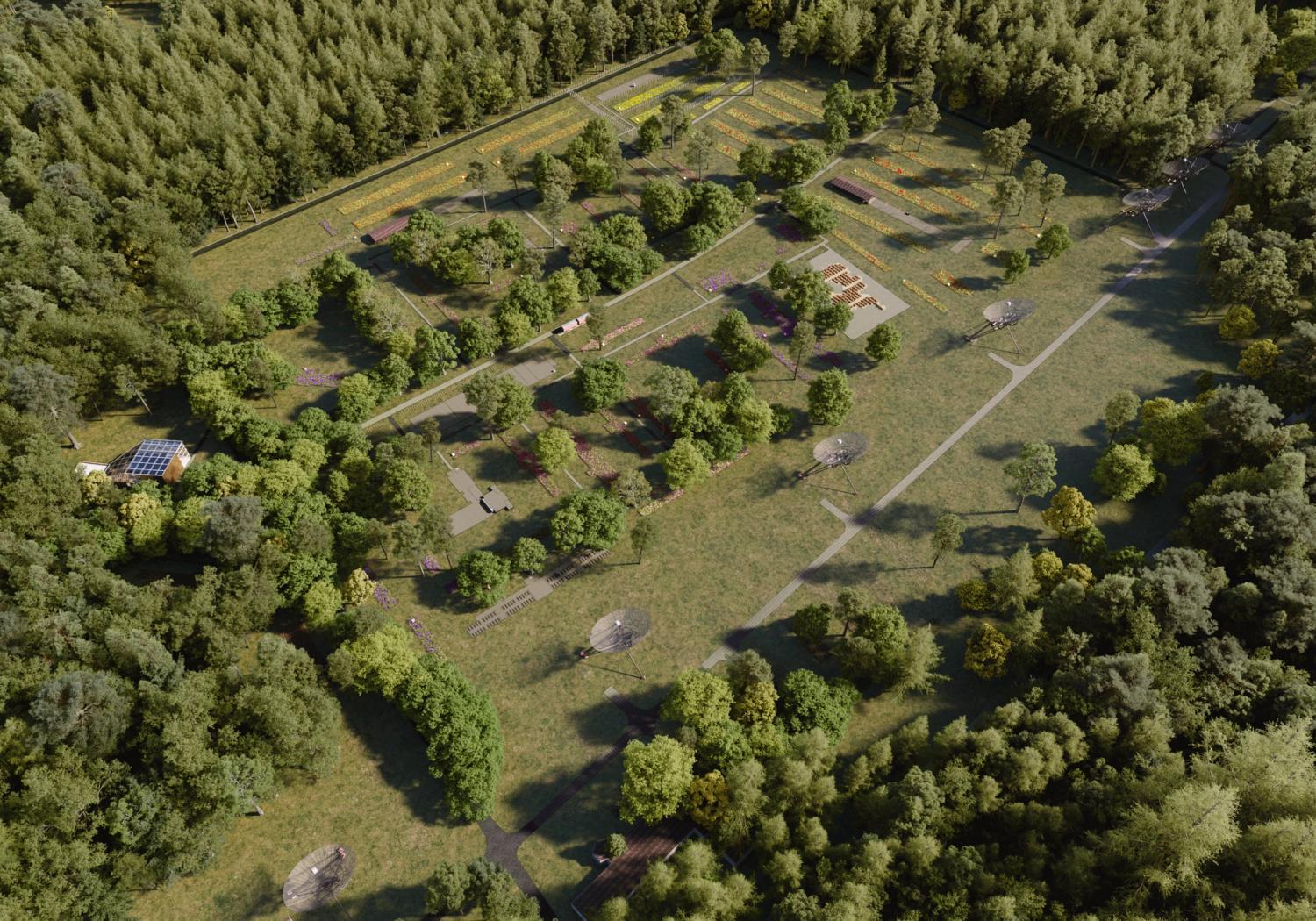
A digitally rendered image showing a bird’s-eye view of what the future Westerbork camp will look like following its renovation

The Camp Westerbork Memorial Centre is undergoing a profound renewal. In a world marked by ongoing war and conflict, the memory of the Holocaust and the significance of Camp Westerbork remains more urgent than ever. As the last eyewitnesses pass away, the responsibility to carry their stories forward grows stronger. We are committed to passing this history on to younger generations in ways that connect with their world. Enhanced visualizations across the campgrounds, a memorial avenue, and a new museum create space to learn, reflect, and keep alive the memory of the 102,000 Jews, Sinti and Roma who were deported from Camp Westerbork and murdered in extermination camps such as Auschwitz and Sobibor.

Making the campsite more tangible

Renewal plan

At the current campground, it is difficult to imagine what the past was like. Almost all the buildings have disappeared, and the functions of the barracks are no longer visible.

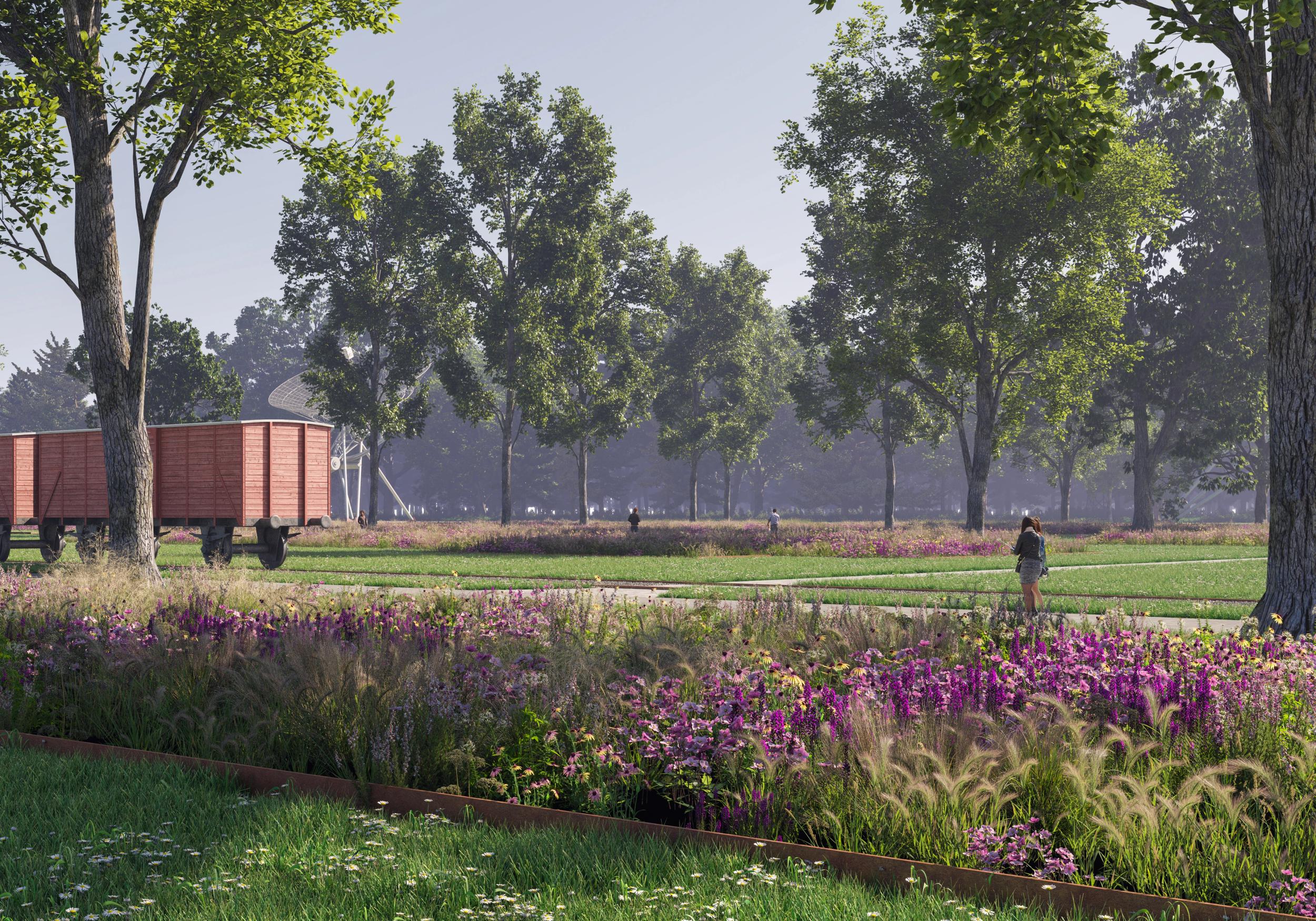
Rather than reconstructing the original camp, the new design focuses on creating a serene, sensory experience. Visitors will encounter areas that highlight different aspects of the camp’s history, alongside audio stories by victims, perpetrators, and witnesses. These stories will be spread throughout the grounds, helping visitors to connect deeply with the history of the site.
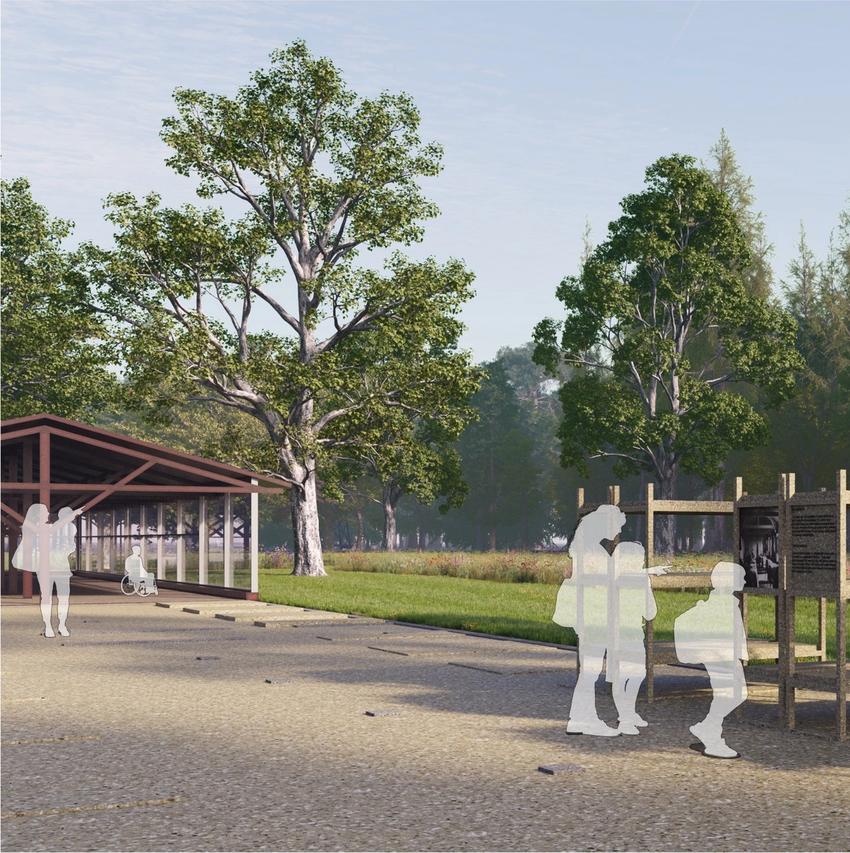
Digital design of the refurbished campsite

Memorial Avenue

Renewal plan

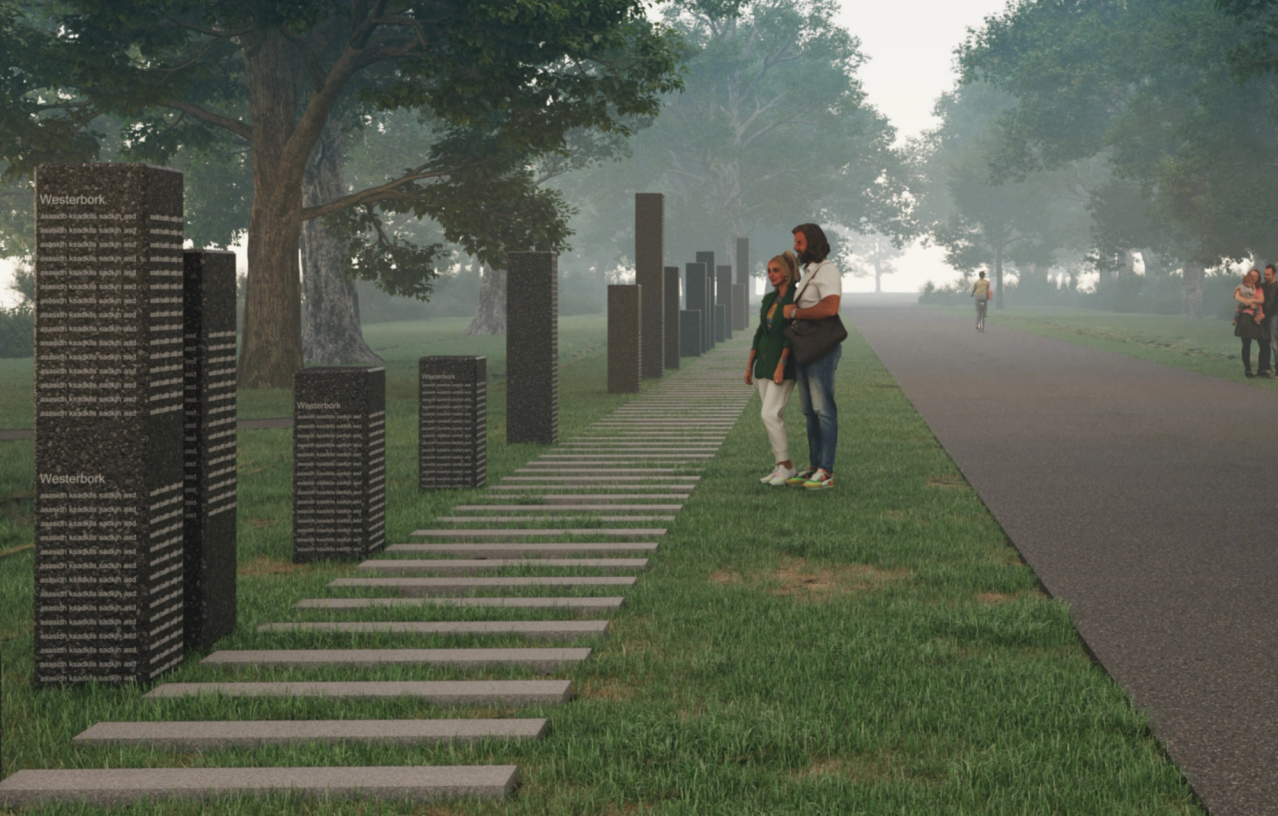
A three-kilometre-long road runs between the museum and the former campground. The road runs parallel to the railway line that was dismantled in 1945. The former railway will be made symbolically visible in the form of horizontal concrete elements in the grass, resembling railroad ties, inscribed with dates and texts. Along the avenue, a new memorial will be erected listing the names of deportees. In this way, we provide further context for this emotionally charged route.

A digital rendering of what the memorial avenue will look like, featuring dark grey blocks and horizontal railway sleepers set into the grass

A new museum

Renewal plan

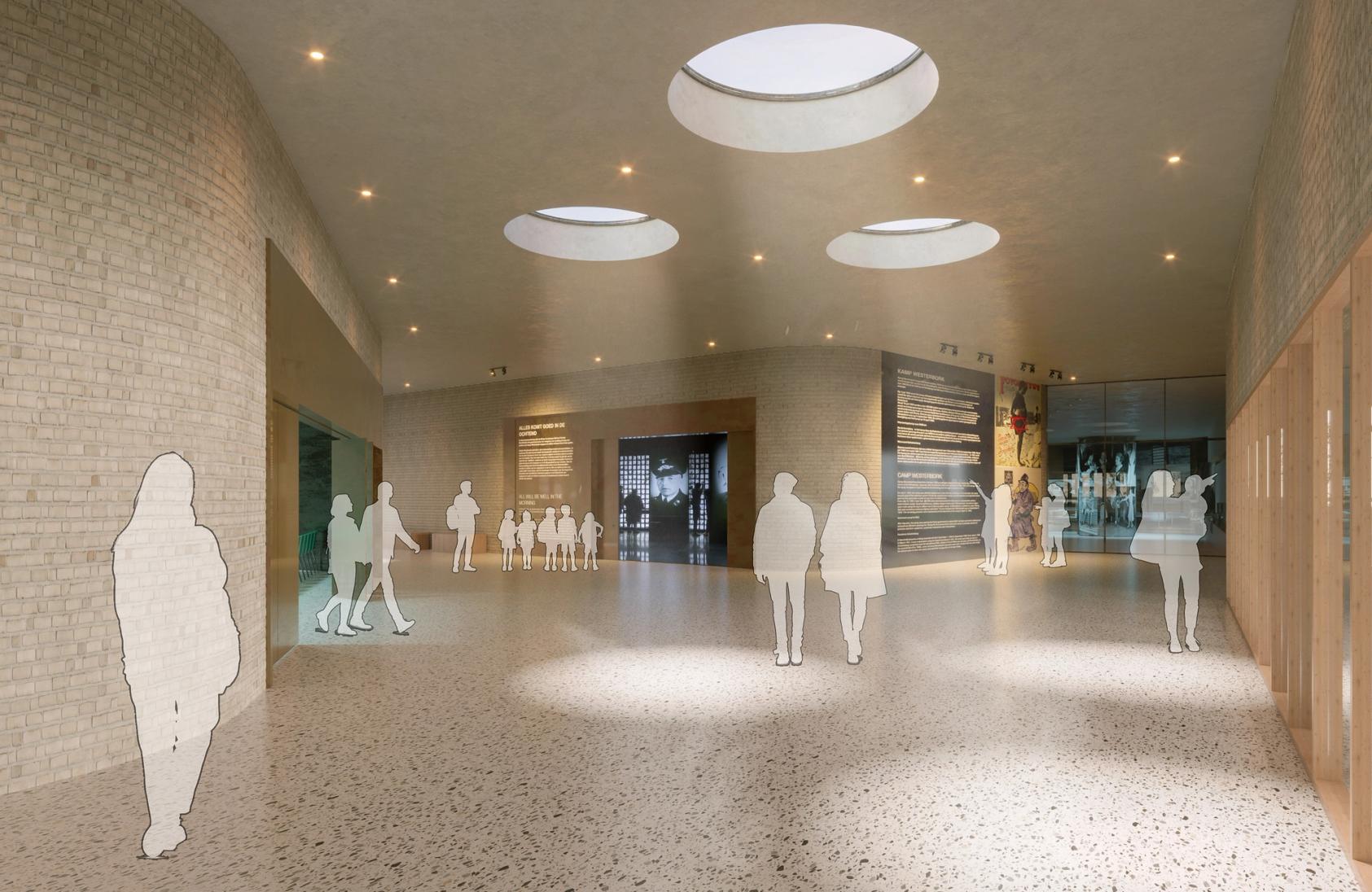
To tell the story of Camp Westerbork’s layered history and accommodate the growing number of visitors, an iconic building has been designed that unfolds into three wings. The exhibition wing is shrouded in privacy, while the entrance and education area are inviting and open. The new exhibition will have a layered structure, beginning in the 1930s and also covering the postwar period, for visitors with and without prior knowledge. We tell the broader history through family stories. The museum will provide a space for reflection and learning.

A digitally designed rendering of the refurbished Camp Westerbork museum. It features a bright entrance hall with circular skylights and various entrances leading to the exhibition spaces

Schattenberg

Renewal plan

The longest period of habitation at Camp Westerbork was that of several thousand Moluccans. The name of the camp was changed to Schattenberg residential camp. From 1951 to 1971, Moluccan KNIL soldiers and their families were housed here. What was supposed to be a temporary stay in the Netherlands became permanent. It is a part of our colonial past that is unknown to many. In the renovation plans, Schattenberg will receive significant attention both on the campground and in the museum.

Historical photograph of children at the former Schattenberg residential home. The children are standing in a row, waving little flags in the air

Support us

The project seeks to keep the memory of Camp Westerbork alive, ensuring that its stories continue to resonate with future generations. Would you like to help us? We really need your support. Please contact us at: vernieuwing@kampwesterbork.nl